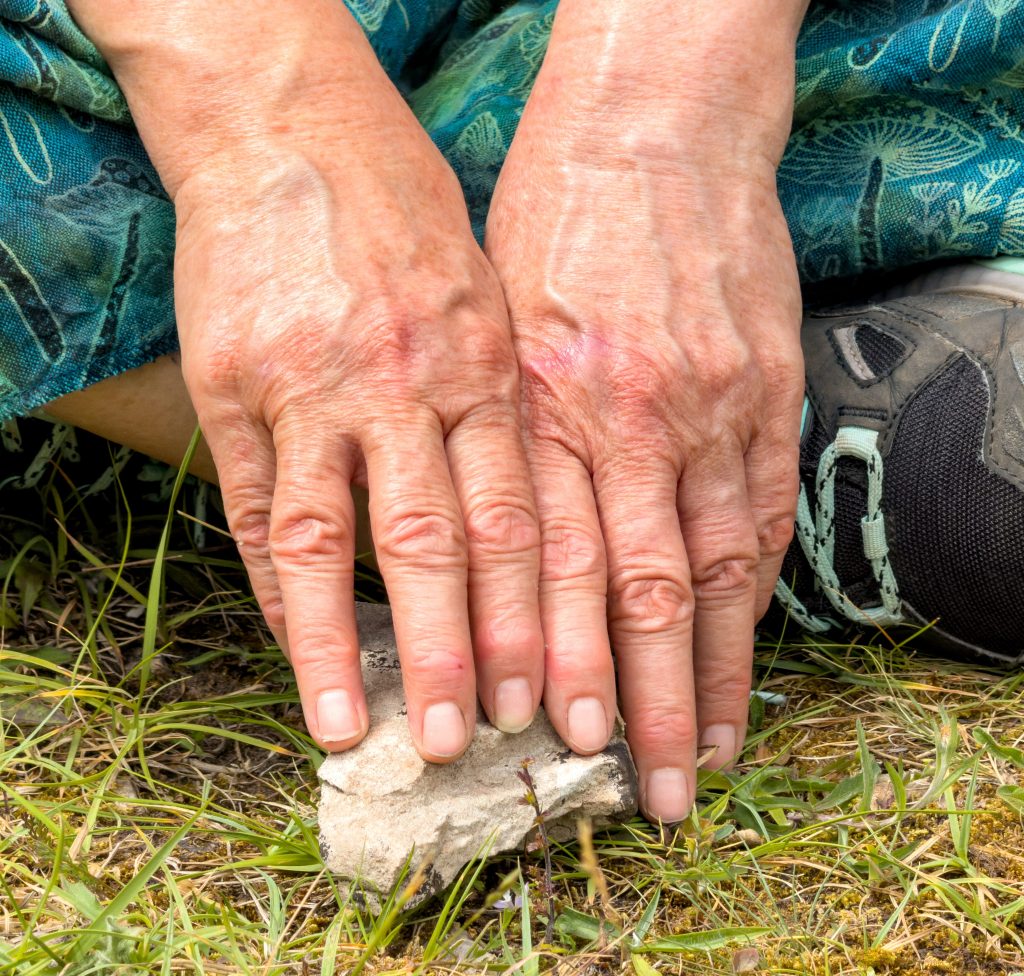
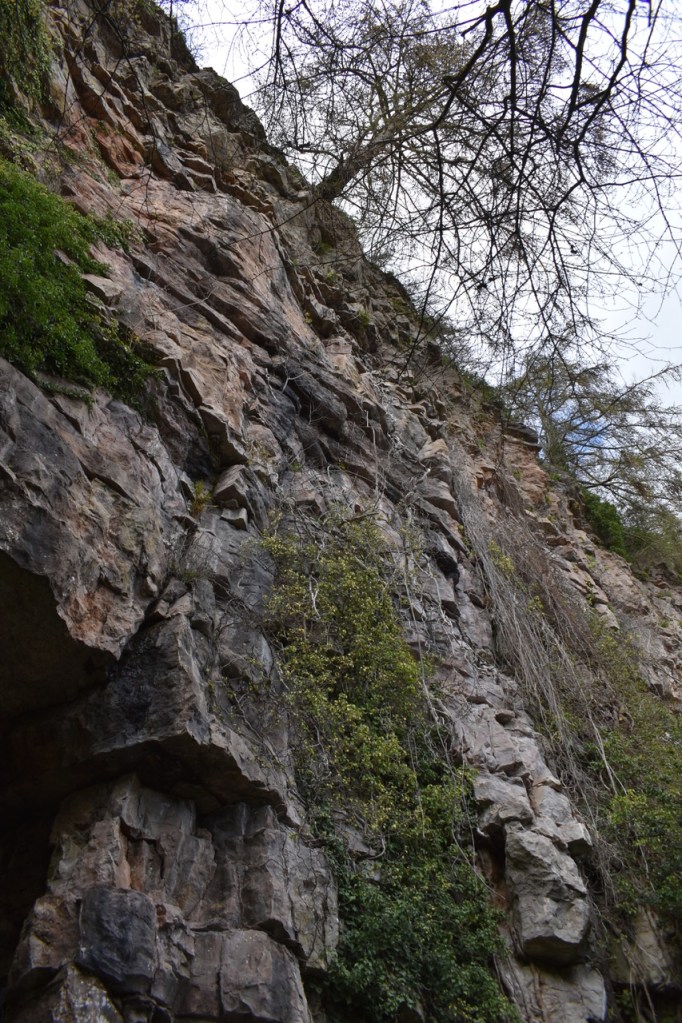
We share a minerology with rock, the weathering of a rock releases strontium and other elements into the environment including the soil and groundwater, which is then taken up by plants. When we eat those plants, we absorb the strontium and so a chemical signature of our local geology develops within our teeth and bones when we are a child. Considering the importance of rock to our ecosystems and our biology launched this current body of work. An ongoing project exploring the geology and historic use of stone in Shropshire, a county that has one of the most diverse geological foundations in the UK, with nearly every major geological period represented. Where rock is present in our landscape and our buildings. Where it has been used and honoured from prehistoric times. Where there are quarries that are 2000 years old to quarries that still operate today. Where rock resides in our psyche through our stories and myths, including tales of the giants that formed the hills. In focusing on stone, I explore a material that has always been integral to human life and culture.
I invite others to consider our relationship with stone. Amongst proposed theories for living better with the earth are those that concentrate on locality, ideas that reflect an indigenous state. The idea that people are more likely to care for their immediate environment if “a deeper sense of connection to place, landscape, ancestry, memory and dwelling can be nurtured, providing a base from which to expand awareness to larger and wider issues “(Thomashow 2021). In his book Stone, Cohen argues for a stone oriented ontology and states that “stone is not a form of life and is therefore relegated to ecological substrate” (Cohen 2015 :11). My work urges a rethink in our understanding of stone, to help bring it into the ecological debate as I seek to communicate its temporality, agency and fragility.
Through an embodied practice on site my recording involves audio recording, sketching, writing, walking, sitting, being with and listening with the rocks. At the studio research and my time spent with the rocks translates into works created with handmade paper; paper made in a slow, mindful process, incorporating rock and plant material from the location. I cast, dry, work on, then re-cast the paper into sculptural forms. The paper experiences transformation, sedimentation, metamorphization, time, forces, it is pressed, layered, folded, cast, reformed, moving between fragility and strength, bearing the traces of each intervention, each mark that is made. Processes reflecting those of rock cycles. I Invite the viewer to consider the words we use to describe the qualities of rock – solid, stable, strong, permanent and those to describe paper – fragile, ephemeral, deteriorates, delicate, and asked-what if we used those paper words in relation to rocks. Rocks are not eternal, they erode, aggregate, metamorphose, they change, it is just that their timescale is vastly different to ours.
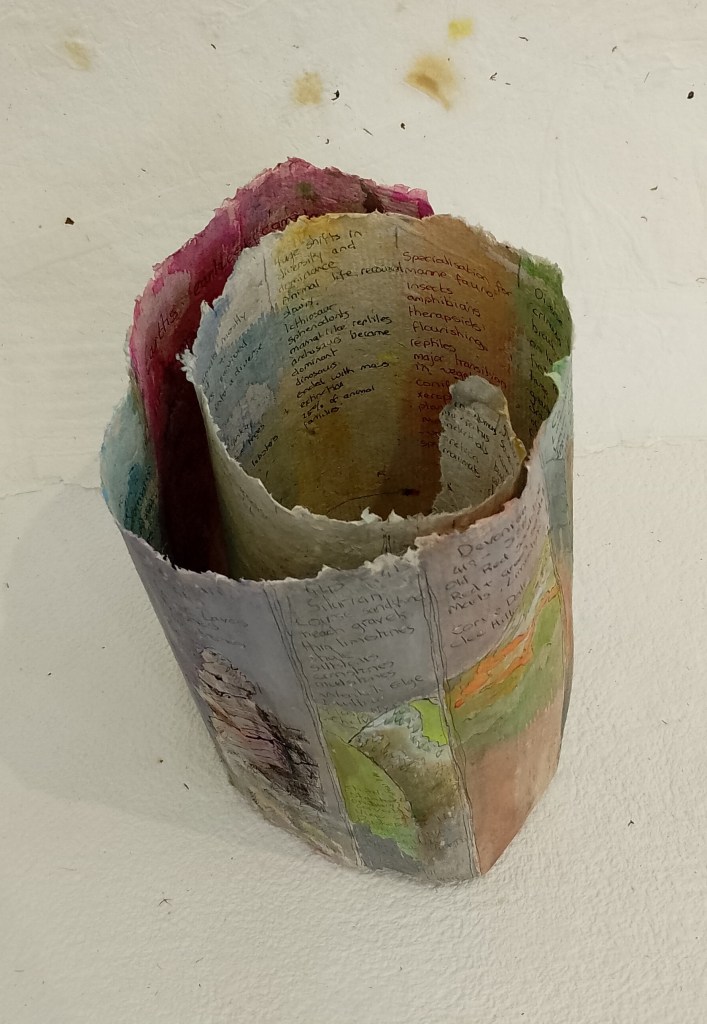
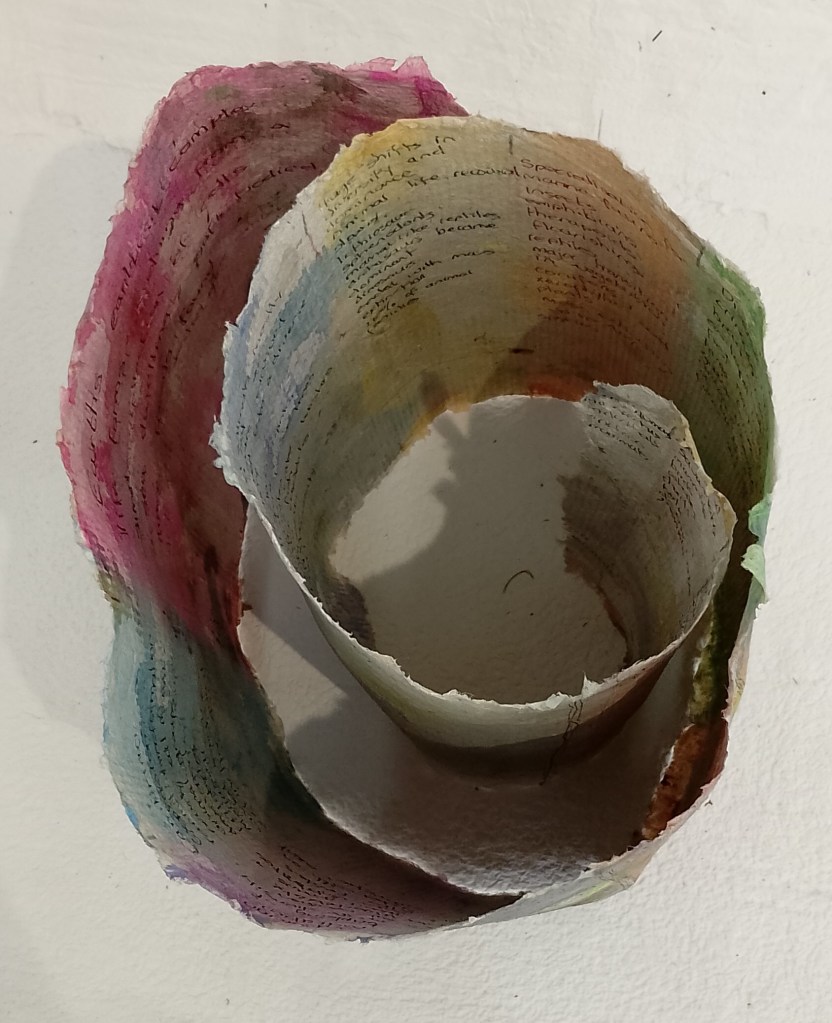
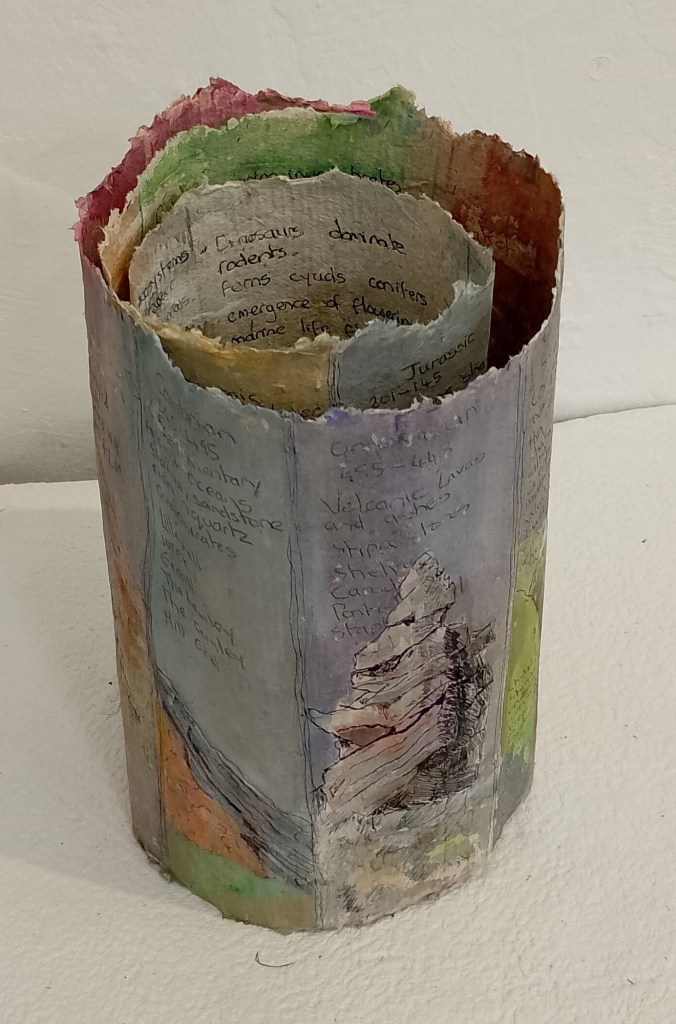
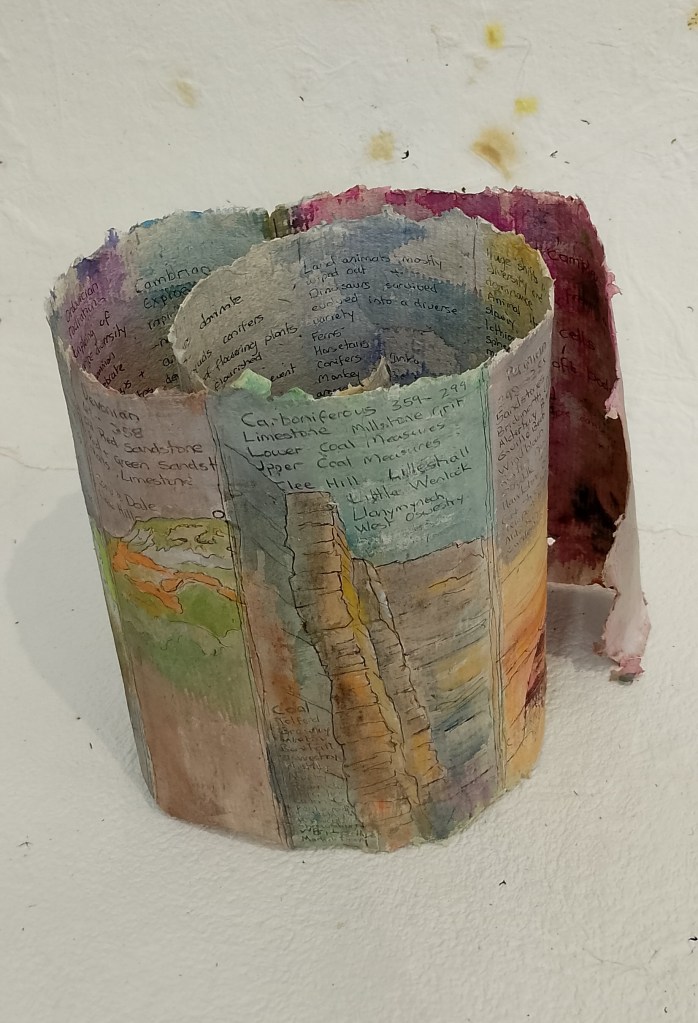
Shropshire – Deep Time, Watercolour and Natural Pigment on Hand Made Paper, Coiled
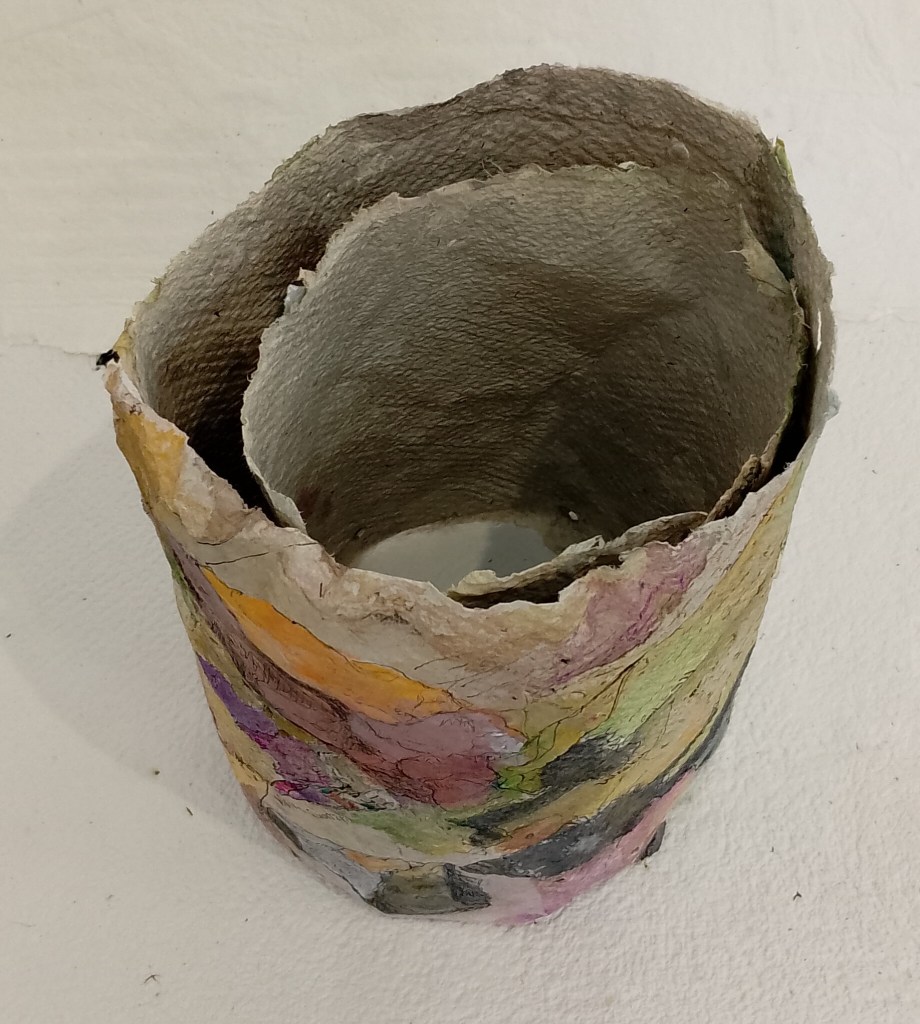
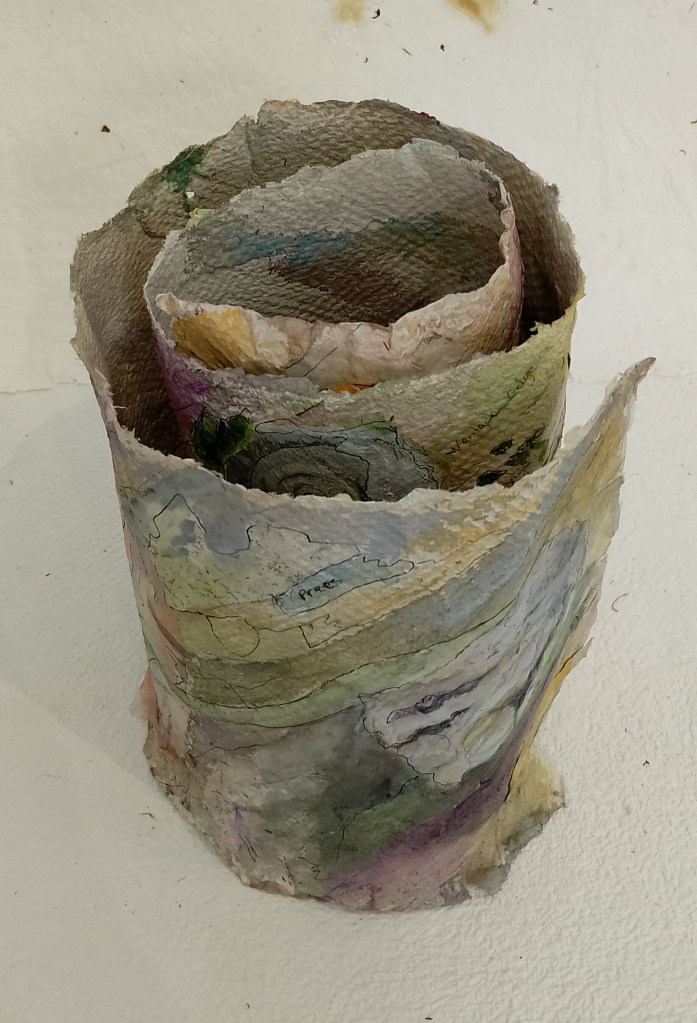
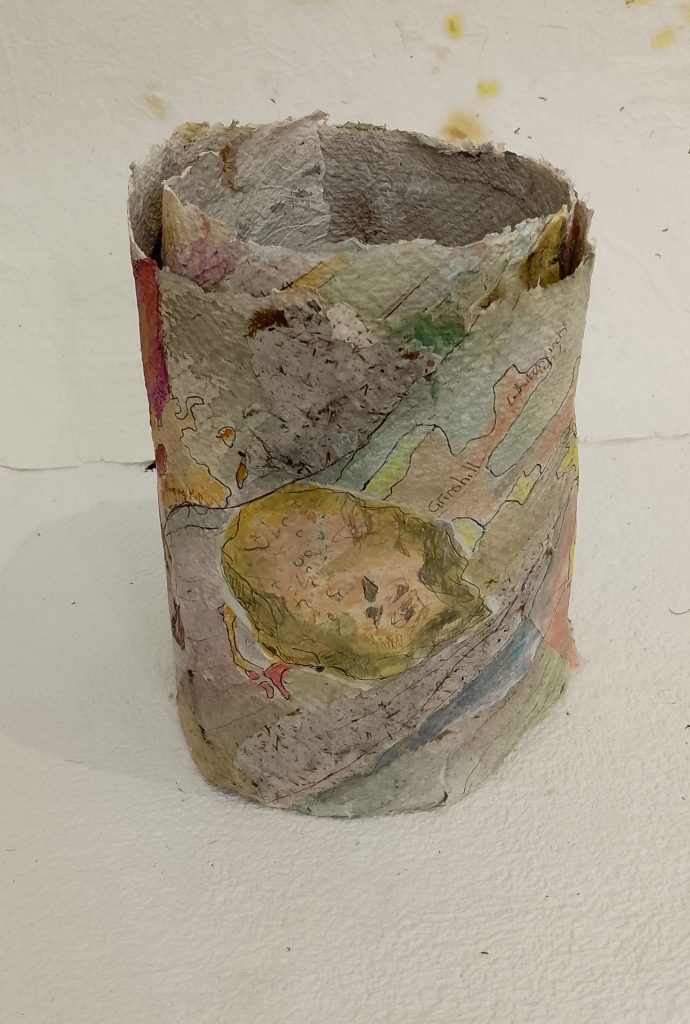
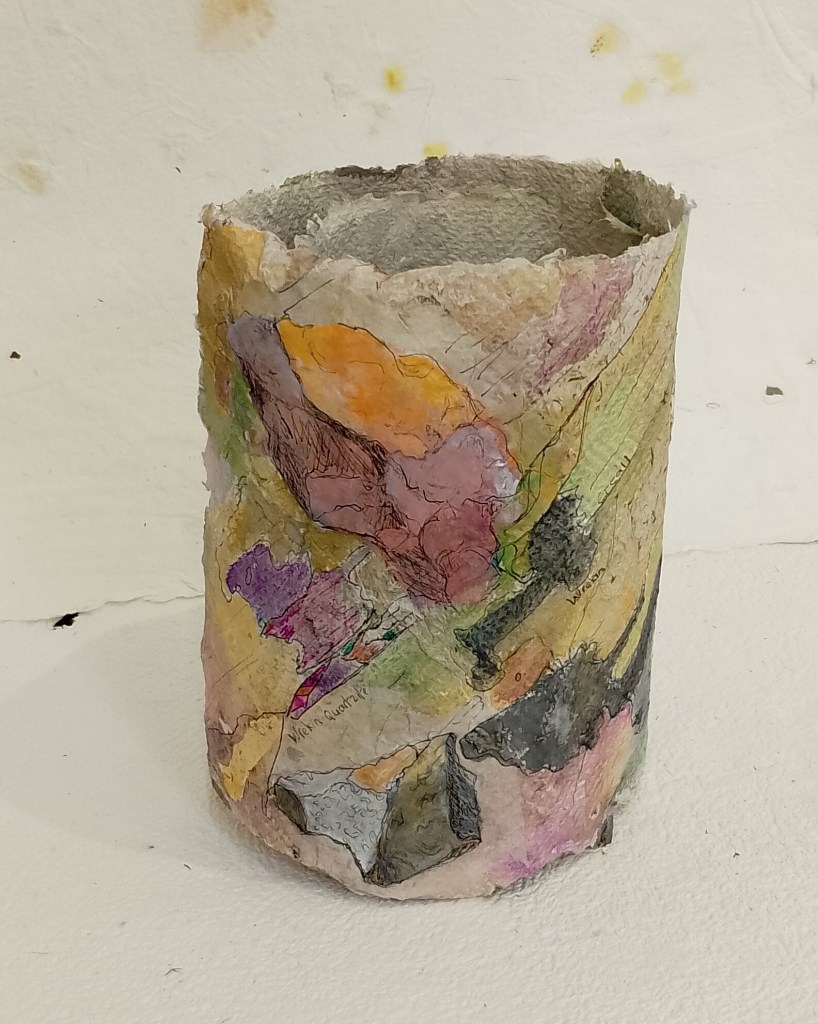
Shropshire – Deep Time, Watercolour and Natural Pigment on Hand Made Paper, Coiled

